Walking into a Pilates studio for the first time can feel intimidating: unfamiliar machines, regulars who know the routine and an instructor using words like "imprint" and "neutral". The good news is that every regular was once a beginner, and good instructors are used to teaching newcomers. A little preparation goes a long way.
Before you book
Choose the right class. Look for "beginner", "foundations", "intro" or "level 1" on the timetable. Avoid "advanced", "dynamic" or "athletic" classes until you know the basics. If you are unsure, call the studio and ask.
Think about your health. If you are pregnant, injured, recovering from surgery or managing a health condition, check with your doctor or physiotherapist first and tell the studio when you book. Clinical Pilates may be a better start.
Check the terms. Read the studio's cancellation policy and what is included in any intro offer.
What to wear and bring
- Fitted, comfortable clothing. Leggings or fitted shorts and a top that will not ride up when you are upside down or lying back. Loose clothing can catch on equipment and hides your alignment.
- Grip socks. Required by many reformer studios. They help you stay steady on the footbar and platform.
- Water bottle and small towel.
- No jewellery or zips that might scratch upholstery or catch on straps.
First class checklist
0 of 6 done
Ticks are saved in this browser only.
When you arrive
Check in at reception, fill in any health forms and introduce yourself to the instructor. Tell them it is your first class and mention any injuries, pain or conditions, even if they seem minor. Leave your phone on silent and your shoes at the door if asked.
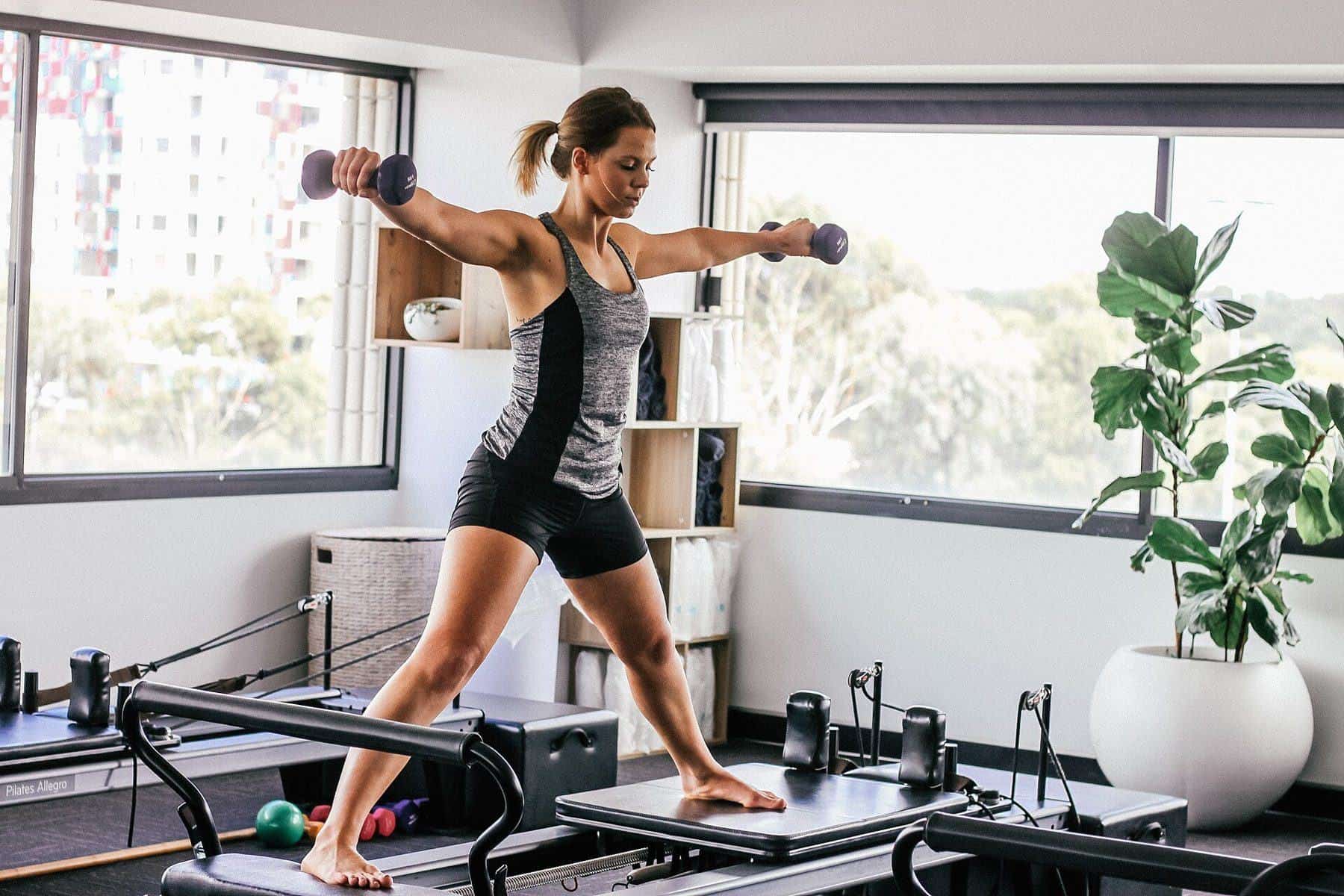
In a reformer class, the instructor will usually show you how to set the springs, adjust the footbar and headrest, and get on and off the carriage safely.
How a beginner class runs
A typical beginner class follows a pattern:
- Breathing and set-up. Lying on your back, you learn to breathe into the sides and back of your ribs and to find a neutral position for your spine and pelvis.
- Warm-up. Gentle movements of the spine, pelvis and limbs. On the reformer, this is often footwork, pressing the carriage out and in.
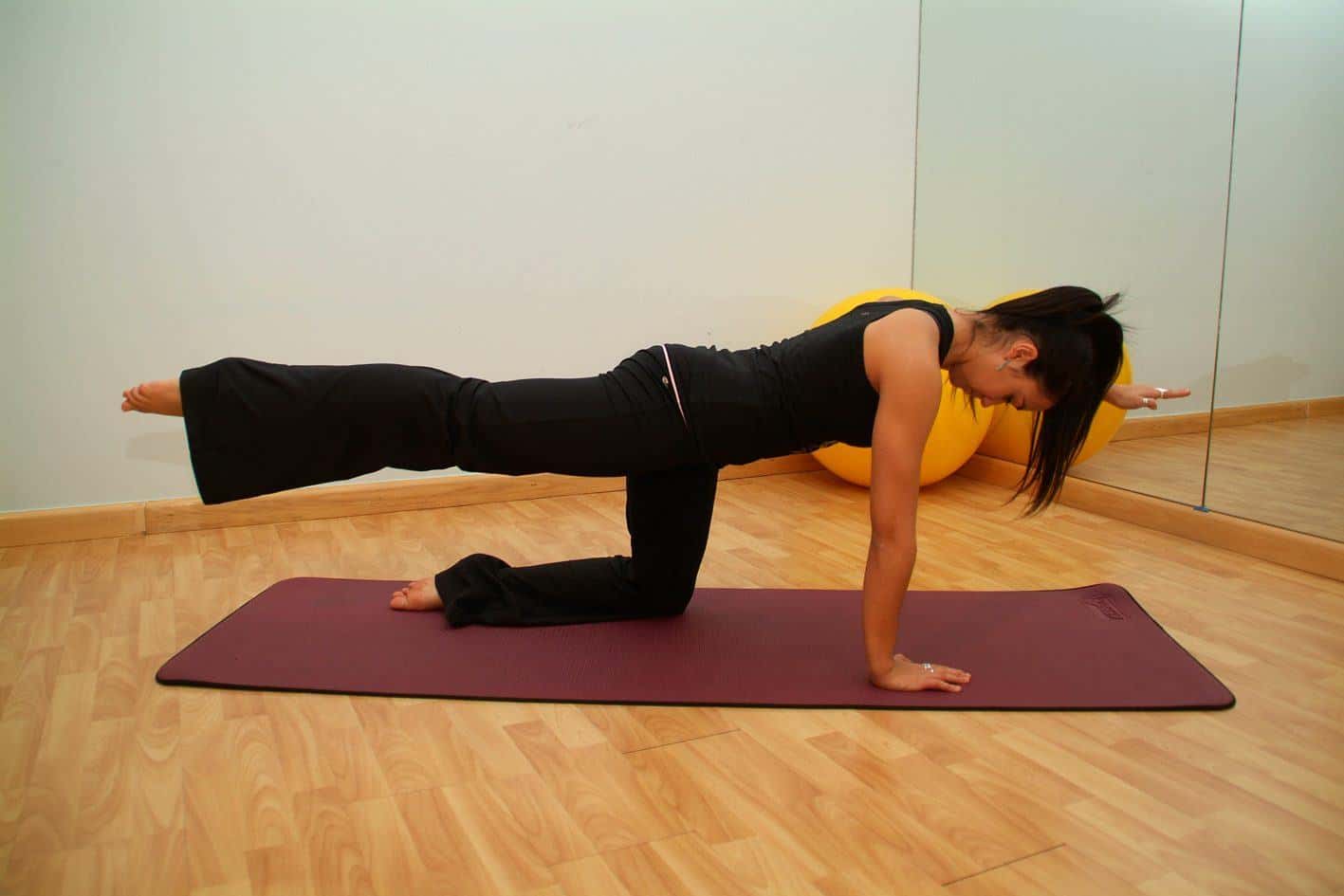
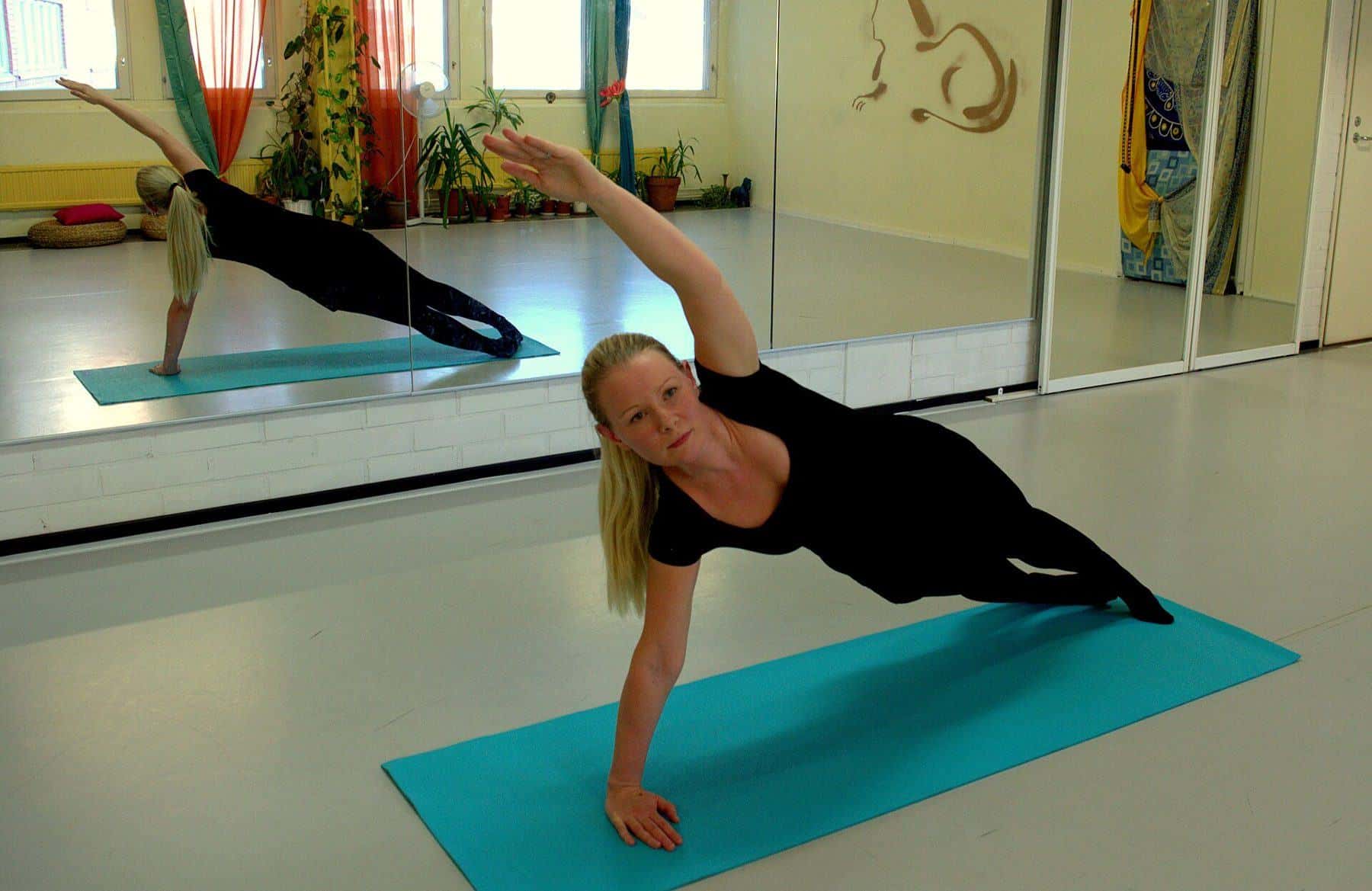
- Main exercises. Simple exercises for the trunk, hips, legs, arms and back from different positions.
- Stretching and cool-down. Gentle stretches and a moment to notice how you feel.
Expect the pace to be slower than a gym class, and expect lots of cues about alignment and breathing.
Terms you will hear
| Term | What it means |
|---|---|
| Neutral spine | The natural curves of your spine, neither flattened nor arched |
| Imprint | Gently flattening the lower back towards the mat |
| Powerhouse | Joseph Pilates' term for the trunk muscles that support the spine |
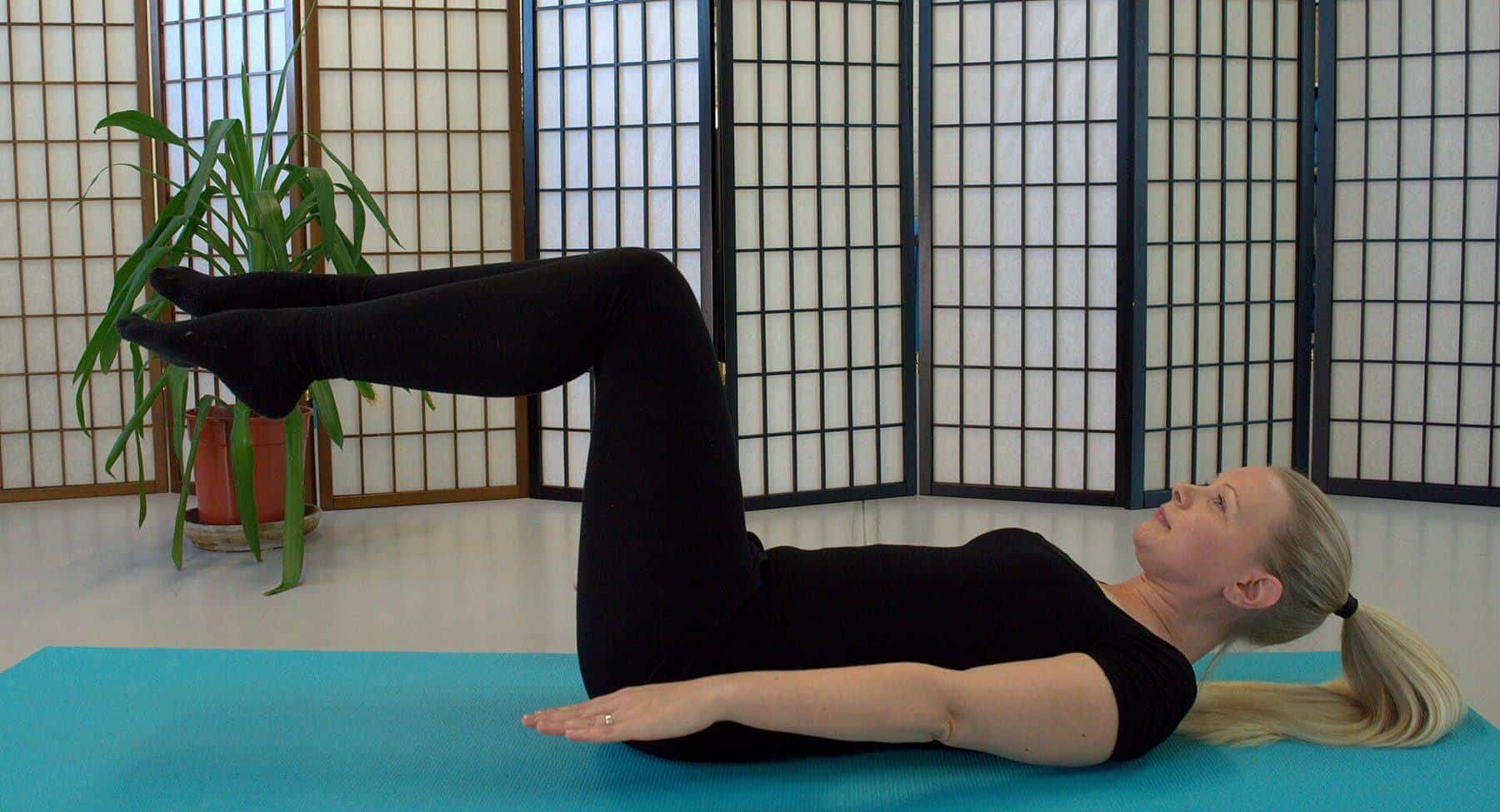
| Tabletop | Lying on your back with hips and knees bent at right angles |
| C-curve | Rounding the spine forward |
| Articulate | Moving the spine one segment at a time |
| Footbar | The bar you press against on the reformer |
| Springs | The adjustable resistance on reformers and other apparatus |
Etiquette
- Arrive on time; late entry can be unsafe on equipment.
- Wipe down your equipment at the end of class if asked.
- Return props to where you found them.
- Ask questions, but save long discussions for after class.
Common first-class feelings
You may feel uncoordinated, especially with the breathing patterns. You may notice muscles you did not know you had. You may find some exercises surprisingly hard and others surprisingly easy. All of this is normal. Focus on one cue at a time.
Afterwards
Drink water and notice how you feel over the next day or two. Mild muscle soreness is common after a new kind of exercise; sharp, lasting or worsening pain is not, and you should seek advice. Book your next class within a week so you keep building on what you learned.
Building a routine
Many studios recommend two or three classes a week while you learn, but one regular class plus a short home practice works too. After a few weeks of beginner classes, ask the instructor whether you are ready for the next level. Combine Pilates with aerobic activity to meet Australia's physical activity guidelines.
Making it a habit
Pick class times that fit your week, book several sessions ahead and treat them like appointments. Going with a friend, or getting to know the instructor and regulars, can make it easier to keep showing up.
If you are nervous
It is very common to feel self-conscious at first. Booking a private introductory session or a small foundations course can help you learn the equipment and the basic movements before joining a busier group class.
Frequently asked questions
What should I wear to Pilates?
Fitted, comfortable clothing that lets you move freely and lets the instructor see your alignment. Avoid zips and buckles that could damage equipment. Many studios require grip socks.
Do I need grip socks?
Many reformer studios require them for hygiene and to stop you slipping. Some sell them at reception. Mat classes may allow bare feet.
Should I eat before Pilates?
A light snack an hour or two before is fine for most people. A heavy meal right before class can be uncomfortable, especially with lying and rolling exercises.
Will I be sore after my first class?
Some muscle soreness a day or two after a new type of exercise is common. It usually eases within a few days. Sharp or lasting pain is not normal.
What if I cannot do an exercise?
That is normal. Tell the instructor, who can give you a modification. Every exercise can be scaled.
How early should I arrive?
Aim for 10 to 15 minutes early for your first class so you can fill in any forms, meet the instructor and learn the equipment.
Sources and further reading
Facts on this page were checked against these primary and official sources. Conditions change — confirm before you travel or buy.
- Back pain — healthdirect Australia
- Physical activity and exercise guidelines for all Australians — Australian Government Department of Health