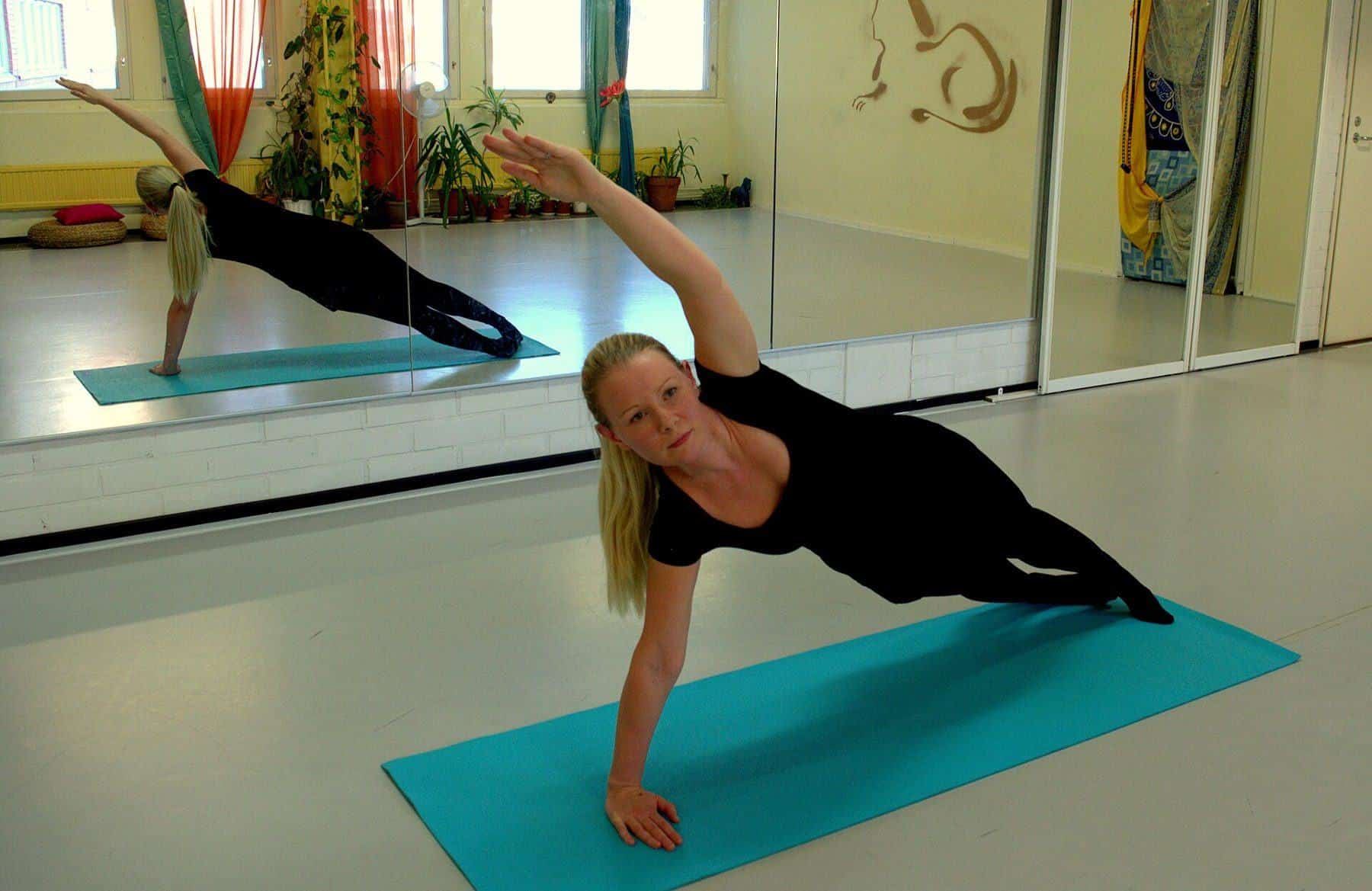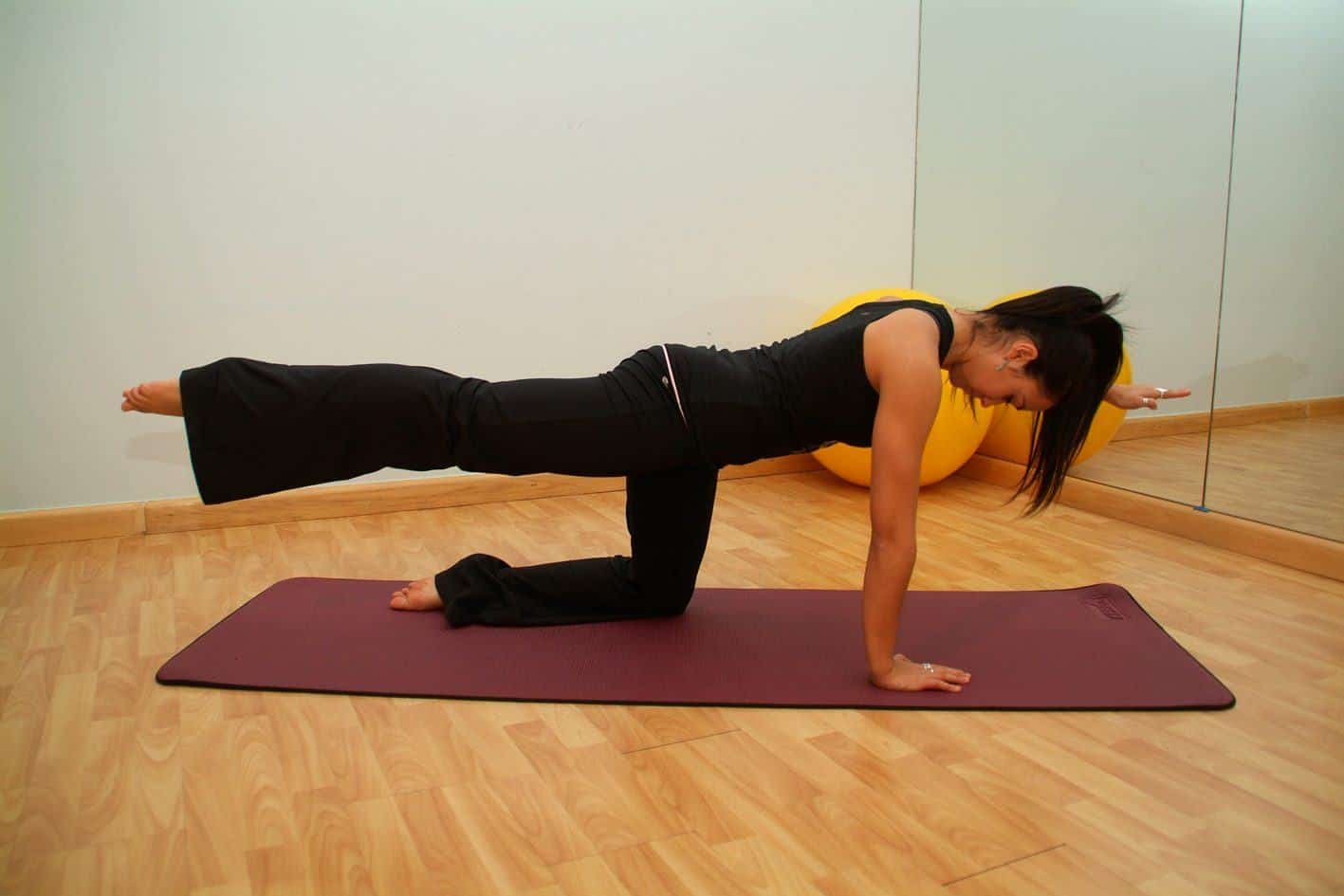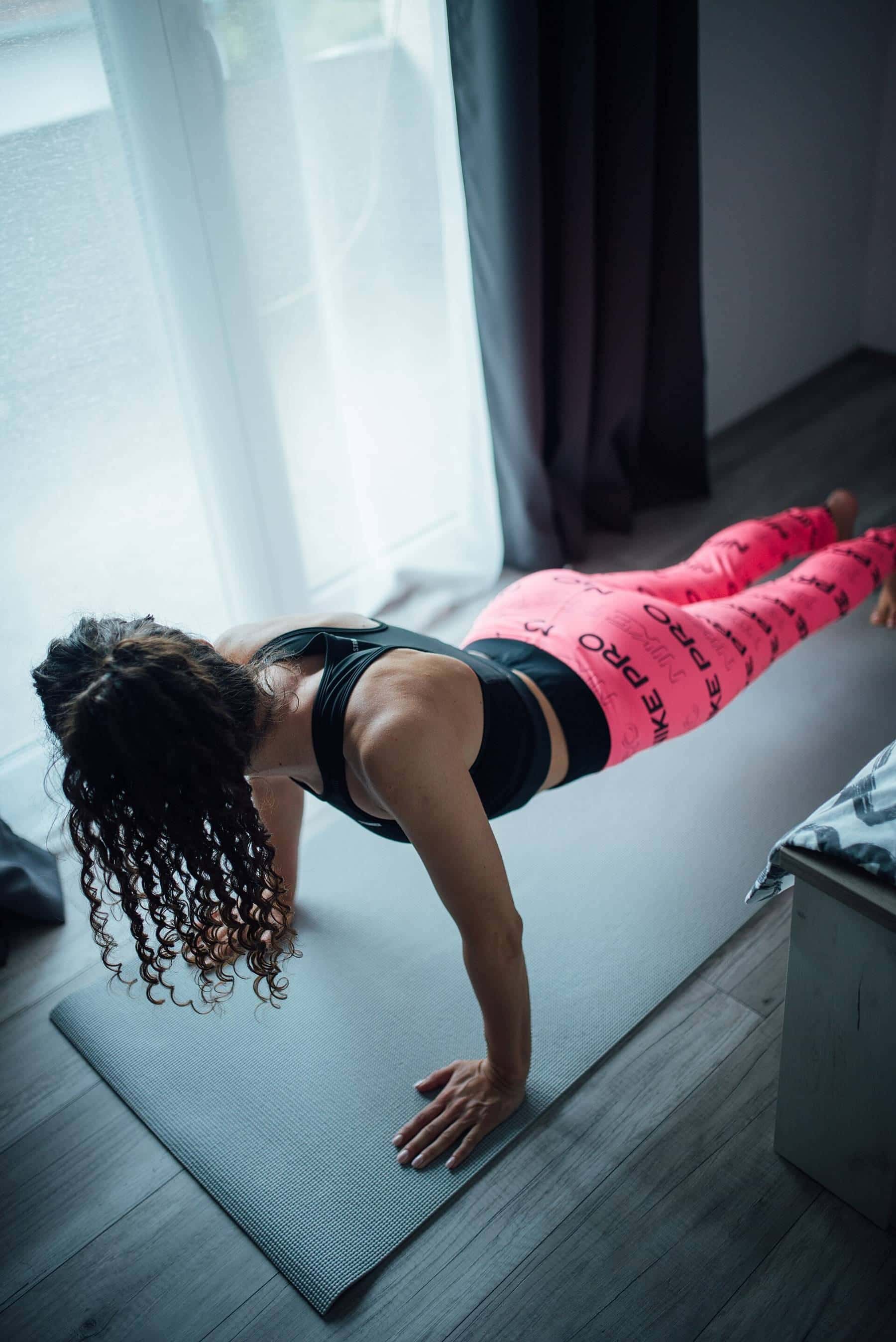
Pilates began as a home practice. Joseph Pilates wrote Return to Life Through Contrology so that readers could follow his mat exercises on their own. Practising at home is still one of the best ways to make progress: it is free or cheap, it fits around work and family, and it reinforces what you learn in class.
Setting up your space
You do not need a dedicated room. Look for:
- Floor space a little longer and wider than your mat, with room to stretch your arms overhead and to the sides.
- A firm, flat floor. Carpet works; on hard floors, a thicker mat adds comfort.
- Clear surroundings. Move furniture with sharp corners out of the way.
- A screen at eye level if you are following a video, so you are not twisting your neck.
- Comfortable temperature and fresh air.
Equipment
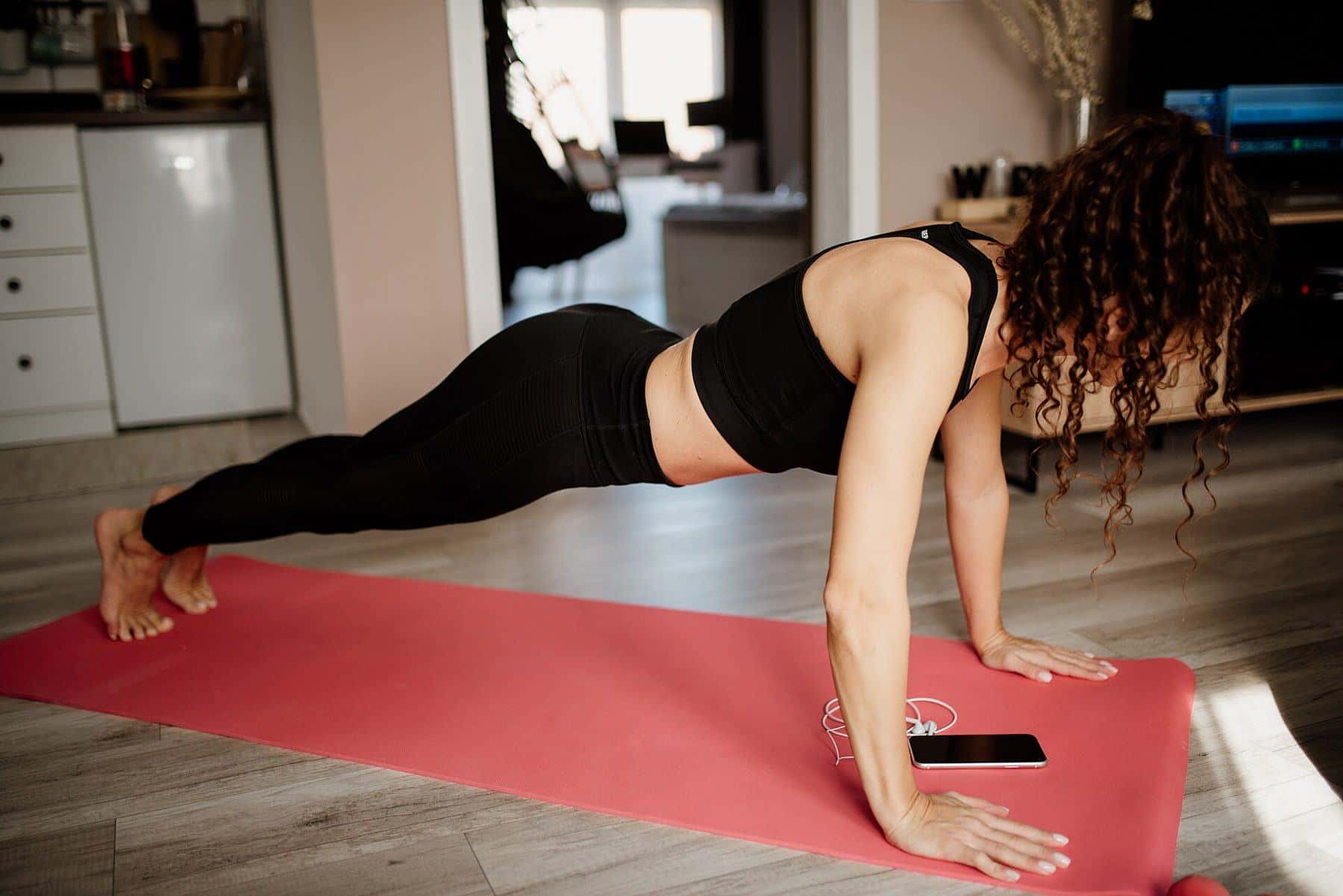
Start with a mat. Pilates mats tend to be a little thicker than yoga mats, which cushions the spine during rolling exercises. A folded towel under your back is a cheap alternative.
Later you might add:
- a Pilates ring for resistance;
- a small soft ball;
- resistance bands;
- light hand weights;
- a foam roller.
None of these are essential, and you can improvise: a cushion between the knees, water bottles as light weights.
Choosing a program
There is no shortage of online Pilates. Quality varies, so look for:
- Qualified instructors, with a recognised Pilates certification.
- Clear cueing, explaining what to do and what to feel.
- Modifications for beginners and for common limitations.
- Sensible claims. Be wary of promises of rapid weight loss, "toning" a body part or fixing a medical problem.
- Structured progressions, so you build up over weeks.
Live online classes add the chance for some feedback. Recorded programs are flexible. Many studios now offer both.
A simple home session structure
Use exercises you have learned in class or from a qualified instructor. A beginner session might follow this shape:
- Breathing and alignment (3 to 5 minutes). Lying on your back, practise rib breathing and finding a neutral spine.
- Mobility (5 minutes). Pelvic tilts, spine curls, knee folds and gentle rotations.
- Strength (10 to 20 minutes). Modified hundred, single-leg stretch, side-lying leg work, swimming prep on all fours, and a supported plank.
- Stretch (5 minutes). Hamstring and hip stretches, spine stretch forward and child's pose.
Start with 15 to 20 minutes and build up. Quality and consistency matter more than length.
Home session checklist
0 of 7 done
Ticks are saved in this browser only.
Staying safe
- Know your limits. If you have an injury, pain, a health condition or are pregnant, check with your doctor or physiotherapist about which exercises are suitable.
- Avoid advanced exercises you have not been taught, especially rolling exercises over the neck and inversions.
- Protect your neck. In curled-up exercises, support your head or keep it down.
- Stop if anything hurts in a sharp, lasting or worsening way.
- Do not rush. Without an instructor watching, it is easy to speed up and lose control.
Combining home and studio practice
Home and studio practice work well together. Classes give you feedback and new exercises; home sessions reinforce them. Ask your instructor for two or three exercises to focus on at home, and bring questions back to class.
Staying motivated
- Schedule sessions in your calendar like appointments.
- Keep your mat somewhere visible.
- Track sessions in a notebook or app.
- Try short sessions on busy days rather than skipping.
- Mix up programs every few weeks.
Making Pilates part of an active week
Australia's physical activity guidelines recommend that adults are active on most, preferably all, days, including muscle-strengthening activities on at least two days each week. A home Pilates routine can help with the strength part. Combine it with walking, cycling, swimming or other aerobic activity, and look for chances to sit less during the day.
When to get help
If you keep feeling pain in the same place, cannot work out an exercise, or are not sure whether something is safe for you, book a class or private session, or see a physiotherapist. A few minutes of expert feedback can save weeks of frustration.
Recording your progress
Keep a simple log of each session: the date, how long you practised, the exercises you did and anything that felt difficult or uncomfortable. After a few weeks, look back. You will often notice that exercises which once felt impossible are now manageable, and the log gives you useful notes to share with your instructor or physiotherapist.
Frequently asked questions
Can I learn Pilates at home as a complete beginner?
You can, but a few in-person classes first help you learn the principles with feedback on your technique. If you start at home, choose beginner programs from qualified instructors.
How much space do I need?
Enough to lie down with your arms stretched overhead and out to the sides, plus room to roll. A space a little longer and wider than a mat is usually enough.
Is a yoga mat OK for Pilates?
Yes, to start. Pilates mats are often a little thicker to cushion the spine during rolling exercises, so you may want a thicker mat or fold a towel under your back.
How long should a home session be?
Even 15 to 20 minutes, done regularly, is worthwhile. Longer sessions of 30 to 45 minutes are common once you are comfortable.
Are free online Pilates videos any good?
Some are excellent and some are not. Check the instructor's qualifications, look for clear cues and modifications, and avoid programs that promise dramatic results.
Do I need a reformer at home?
No. Mat Pilates gives you a full workout. A home reformer is a big investment best considered after studio experience.
Sources and further reading
Facts on this page were checked against these primary and official sources. Conditions change — confirm before you travel or buy.
- Physical activity and exercise guidelines for all Australians — Australian Government Department of Health
- Back pain — healthdirect Australia
- Joseph Pilates — Wikipedia