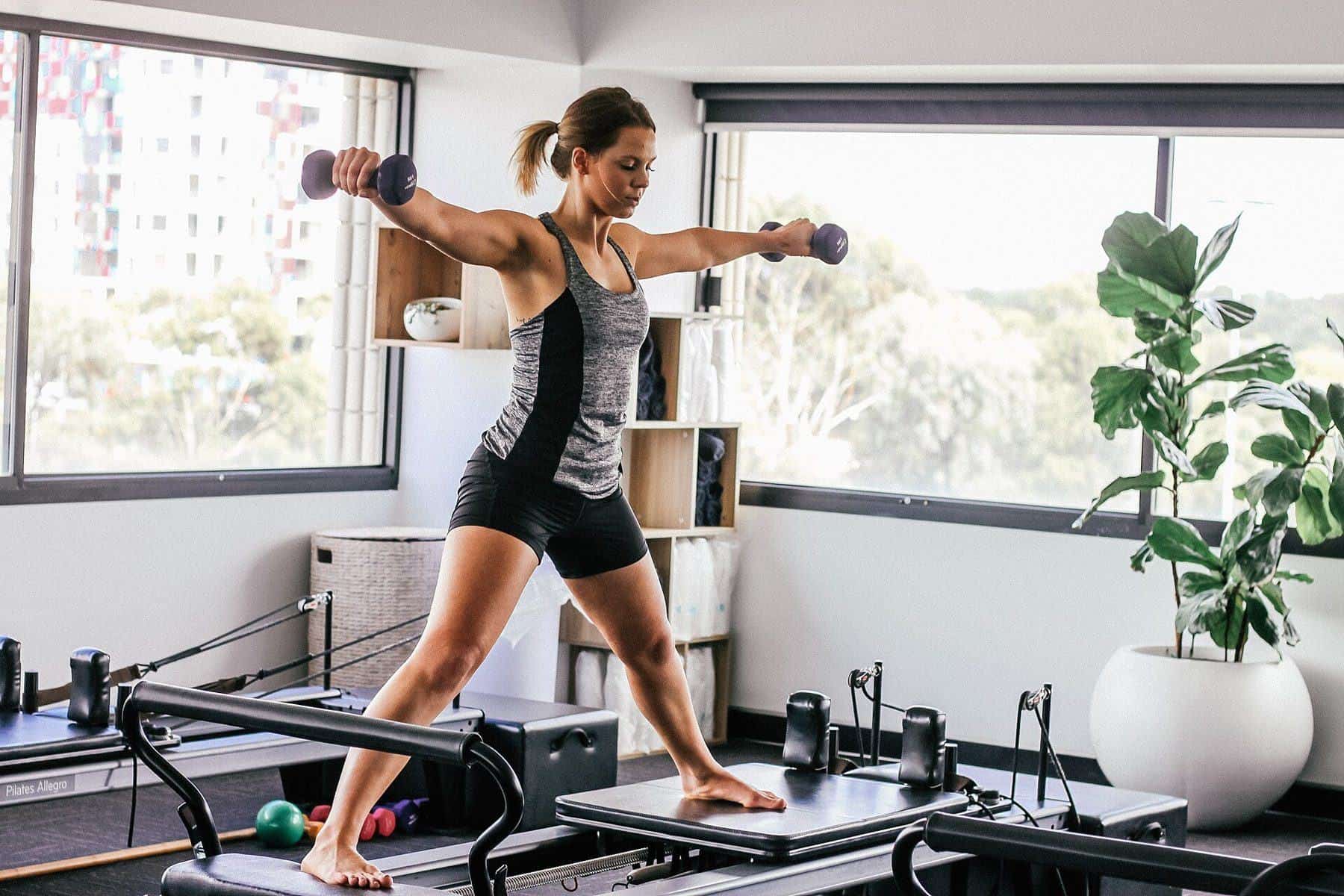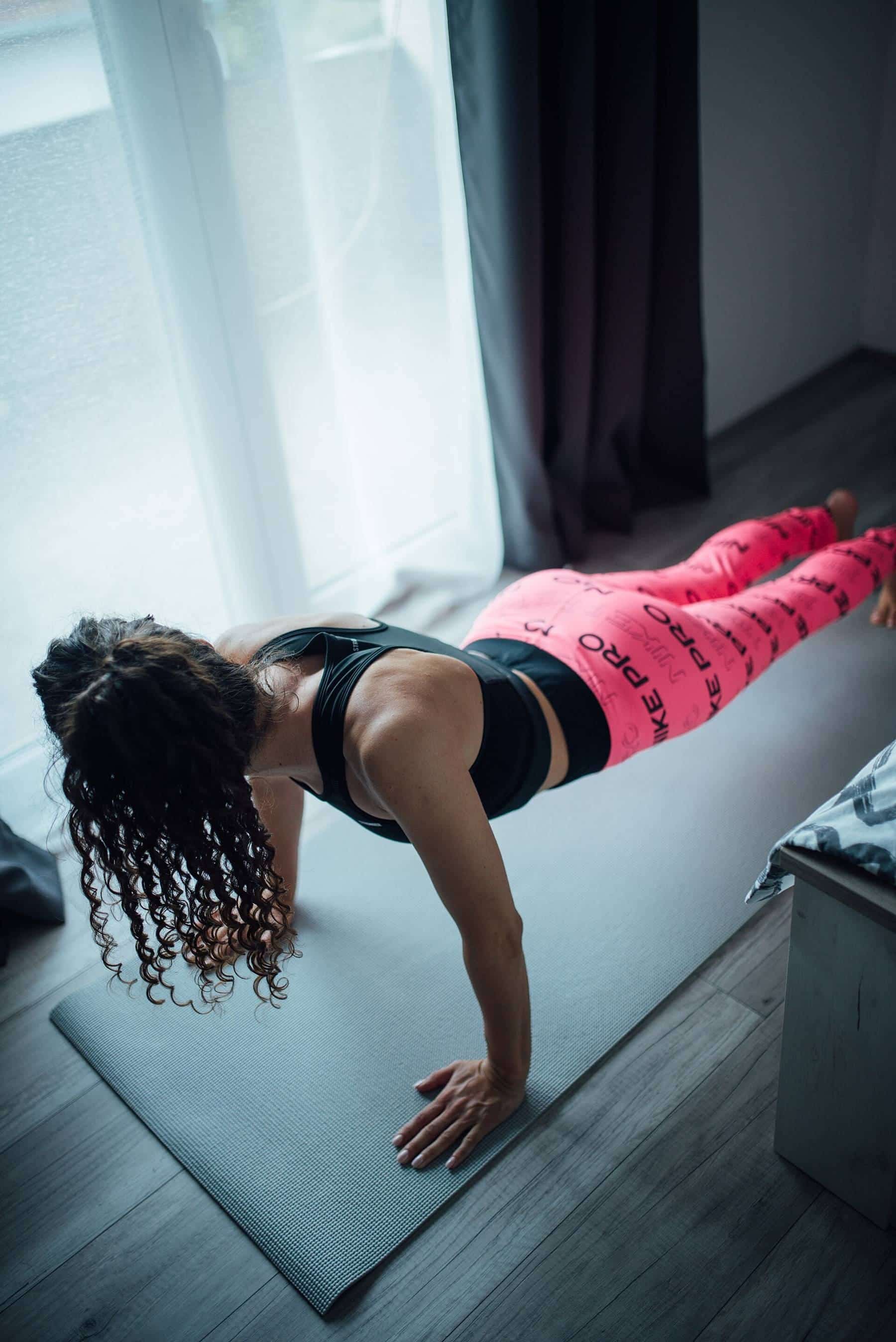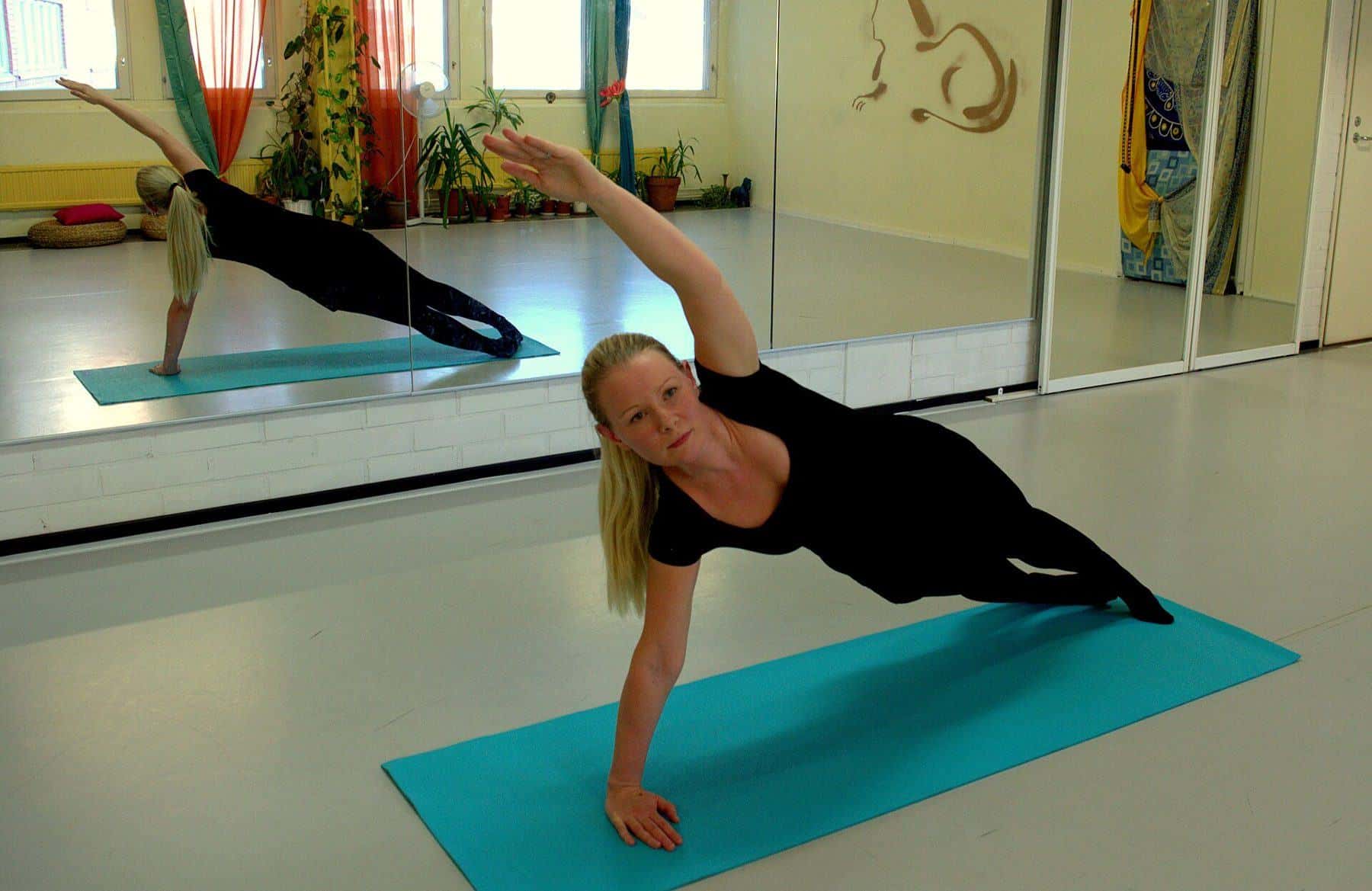
Before there were reformer studios, there was the mat. Joseph Pilates developed his first exercises with minimal equipment while interned during World War I, and his 1945 book Return to Life Through Contrology presents a sequence of mat exercises that readers could do at home. Mat work remains the foundation of the method: most instructors train on the mat first, and the principles you learn there carry over to every piece of apparatus.
What a mat class looks like
A group mat class typically runs for 45 to 60 minutes. You will usually start lying on your back to focus on breathing and finding a neutral spine and pelvis, then work through exercises lying on your back and front, on your side, on all fours, kneeling and seated, finishing with stretches.
The pace depends on the level. Beginner classes break exercises down and offer modifications; advanced classes link exercises into a flowing sequence with little rest.
Classic mat exercises
You will hear these names in many classes. Instructors often teach modified versions first.
- The hundred. Lying on your back with head and shoulders curled up, you pump the arms while breathing in for five counts and out for five, for 100 beats. A classic warm-up.
- The roll-up. Rolling the spine up from lying to sitting and back down, one vertebra at a time.
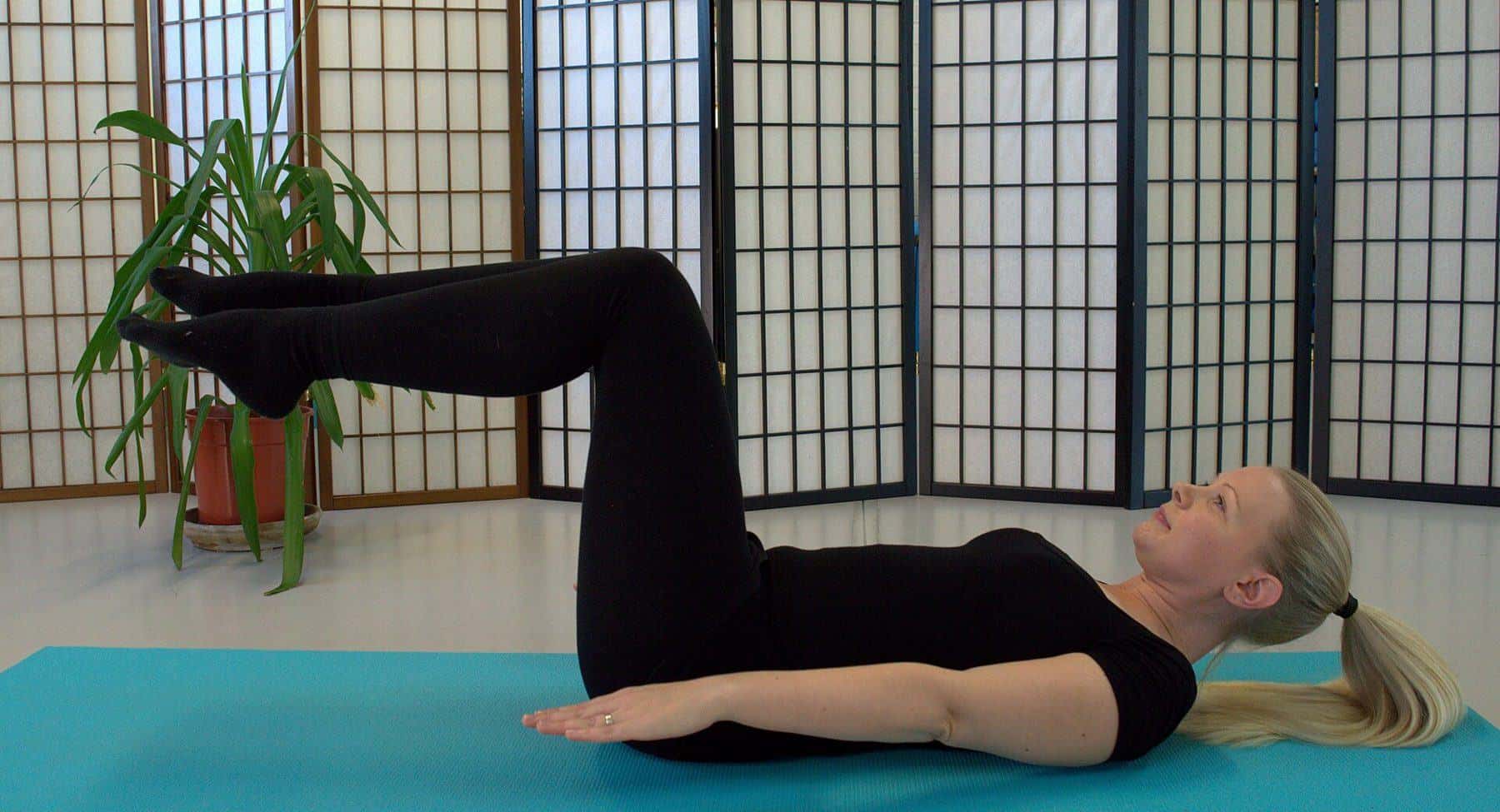
- Single-leg stretch. Alternately drawing one knee in while extending the other leg, with head and shoulders curled.
- Rolling like a ball. Balancing on the tailbone in a tucked position and rolling back and up.
- Spine stretch forward. Seated with legs apart, reaching forward while articulating the spine.
- Swan. Lying face down and lifting the chest to extend the upper back.
- Side kick series. Lying on your side, moving the top leg in different directions while keeping the trunk still.
- Teaser. Balancing in a V-shape, an advanced exercise.
Props in mat classes
Contemporary mat classes often add small props to support or challenge you:
- Pilates ring (magic circle). A flexible ring you squeeze between the hands, knees or ankles.
- Small soft ball. Used under the pelvis, between the knees or behind the back.
- Resistance bands. Add resistance to leg and arm work.
- Foam roller. For balance challenges and self-massage.
- Light hand weights. For arm work.
You do not need any of these to start.
Benefits and limits
Mat Pilates builds strength and endurance in the trunk, hips and shoulders, improves flexibility and teaches control and body awareness. It needs little equipment, it is the most affordable style to attend, and it is easy to continue at home or while travelling.
Like other Pilates, mat work is generally moderate intensity. It counts towards the muscle-strengthening part of Australia's physical activity guidelines; add aerobic activity such as brisk walking or cycling for heart and lung fitness.
Is mat harder than reformer?
People often assume the mat is the "easy" option. In practice, with no springs to assist you, some mat exercises are harder than their reformer equivalents. A roll-up, for example, needs strength and control through the whole movement. Good instructors offer modifications so you can progress safely.
Tips for beginners
- Choose a beginner class and tell the instructor about any injuries or health conditions.
- Use modifications. Keep your head down, bend your knees or reduce the range when you need to.
- Prioritise control. Fewer, slower repetitions are better than many sloppy ones.
- Keep breathing. If the breathing pattern confuses you, just breathe naturally.
- Protect your neck. In curled-up exercises, support your head with your hands or rest it down if your neck tires.
Mat class essentials
0 of 6 done
Ticks are saved in this browser only.
Mat Pilates at home
Because it needs so little equipment, mat Pilates is ideal for home practice. Start with exercises you have learned in class, and follow programs taught by qualified instructors. Our home Pilates guide explains how to set up and stay safe.
Mat versus reformer at a glance
| Mat | Reformer | |
|---|---|---|
| Cost | Usually lower | Usually higher |
| Equipment | Mat and props | Reformer machine |
| Assistance | None from springs | Springs can assist |
| Home practice | Easy | Needs a machine |
Choosing a mat class
Mat classes are run by Pilates studios, gyms, community centres, yoga studios and physiotherapy practices. Look for a qualified instructor with a recognised mat or comprehensive certification and classes small enough that the instructor can watch your technique. See how to choose a studio.
Getting more from each class
Arrive a few minutes early to set up your mat and props, and use the time to notice how your body feels that day. During class, focus on one or two cues at a time rather than trying to perfect everything at once. Afterwards, note which exercises felt difficult and ask the instructor for a simpler version or a home exercise to practise. Over a few weeks, these small habits make a noticeable difference to your control and confidence.
Frequently asked questions
Is mat Pilates easier than reformer?
Not necessarily. Without springs to support you, some mat exercises are harder than their reformer versions. Beginner mat classes use simpler exercises and modifications.
What is the hundred?
The hundred is a classic Pilates mat exercise in which you lie on your back, curl your head and shoulders up and pump the arms while breathing in for five counts and out for five counts, for a total of 100 beats.
What kind of mat do I need?
Pilates mats are often a little thicker than yoga mats to cushion the spine during rolling exercises. Any stable, non-slip mat will do to start.
Can mat Pilates build strength?
Yes. Mat Pilates uses body weight and sometimes light props to build muscular strength and endurance, particularly in the trunk and hips.
How long is a mat class?
Most group mat classes run for 45 to 60 minutes.
Can I learn mat Pilates online?
Many people do, but a few in-person classes help you learn the basics with feedback on your technique.
Sources and further reading
Facts on this page were checked against these primary and official sources. Conditions change — confirm before you travel or buy.
- Pilates — Wikipedia
- Joseph Pilates — Wikipedia
- Back pain — healthdirect Australia