The reformer is the best-known piece of Pilates apparatus and the engine of the reformer studio boom across Australian suburbs. Joseph Pilates originally called it the Universal Reformer, for "universally reforming the body". Today's machines are made of timber or aluminium, but the principle is the one he designed: a sliding carriage, springs and straps that let you push and pull against adjustable resistance.
How the reformer works
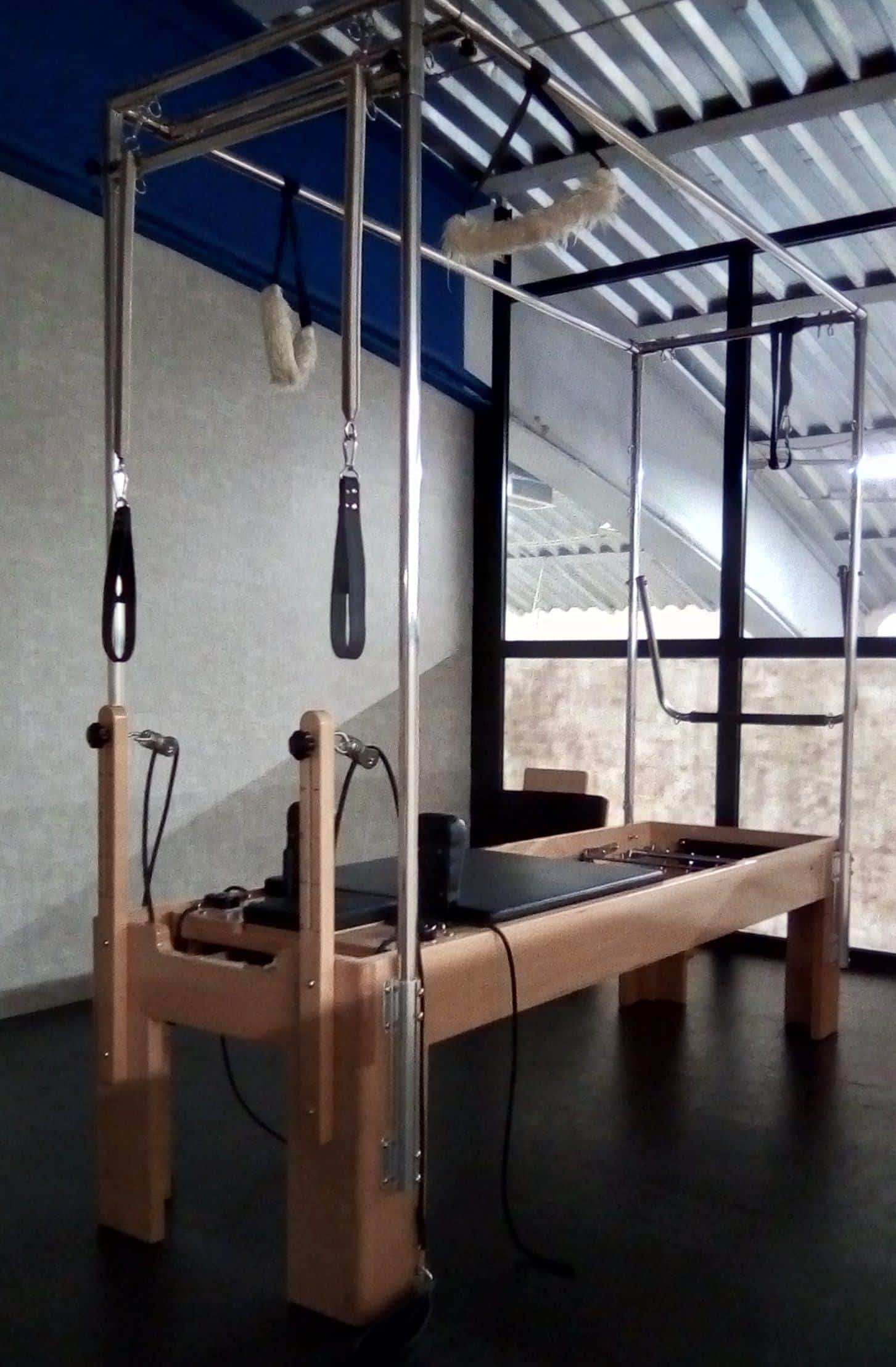
A reformer has five main parts:
- The frame. A long, low bed with rails along each side.
- The carriage. A padded platform that slides along the rails. You lie, sit, kneel or stand on it.
- The springs. Attached under one end of the carriage, they pull it back towards the frame. Springs come in different tensions, often colour-coded, and the instructor tells you which to hook on.
- The footbar. An adjustable bar at one end that you press against with your feet or hands.
- The straps or ropes. Long straps with handles or loops, pulled with the hands or feet over pulleys.
Most machines also have shoulder blocks, an adjustable headrest and a platform at the foot end. Some have a tower or are convertible to a Cadillac-style frame.
1883
Joseph Pilates born
Inventor of the original Universal Reformer
26
Patents
Credited to Joseph Pilates
5
Main parts
Frame, carriage, springs, footbar, straps
Why the springs matter
Springs are what make the reformer so versatile. When you push the carriage away, the springs resist; as you return, you must control the carriage back rather than letting it slam. That controlled return is a big part of the workout.
Springs can also assist. In some exercises a heavier spring supports your body weight, making a movement possible before you have the strength to do it on the mat. In others, a lighter spring makes the carriage less stable and the exercise harder. This is why "more springs" does not always mean "harder", and why you should follow your instructor's settings.
What happens in a group reformer class
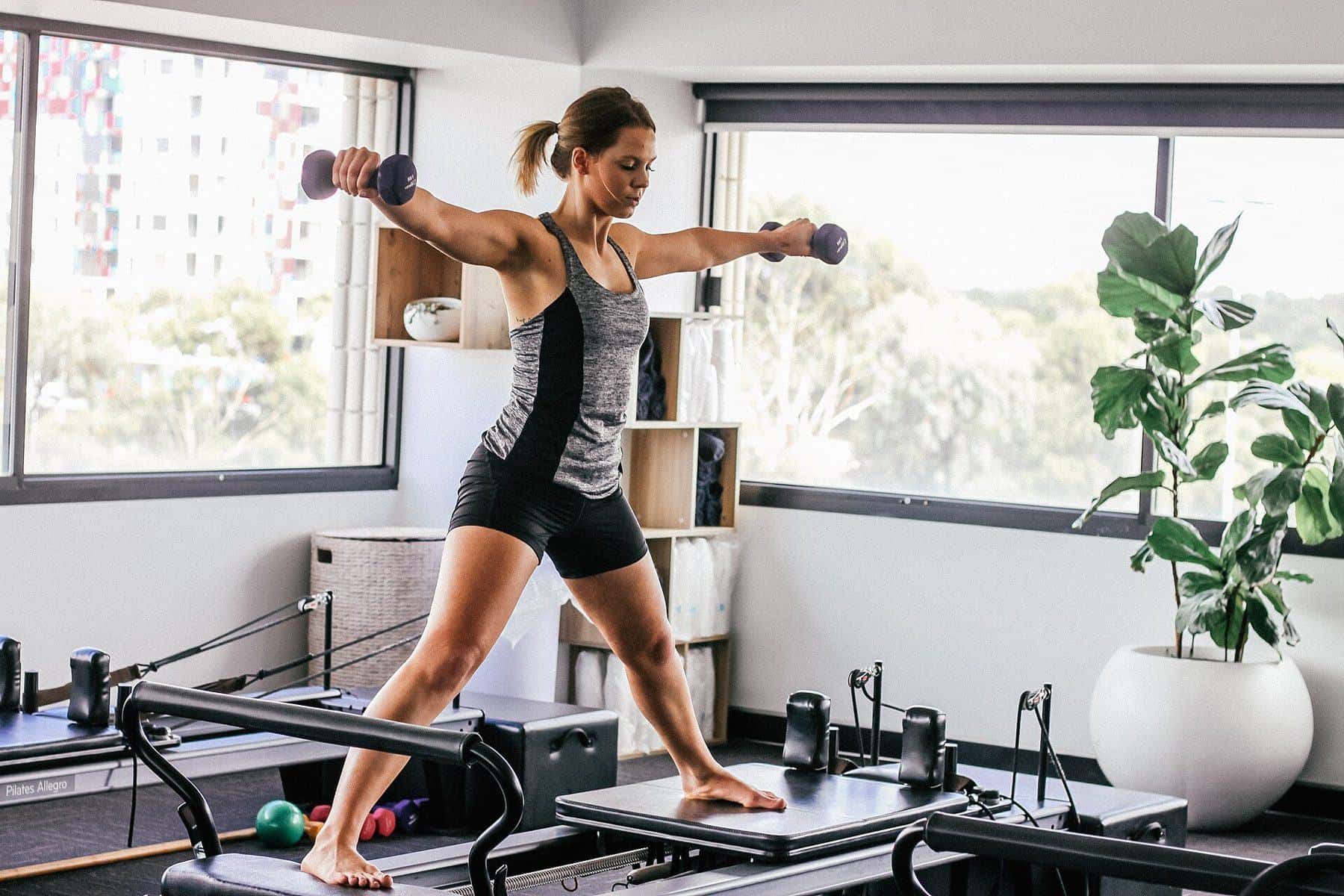
Most Australian reformer studios run group classes with one machine per person. A typical class lasts 45 to 55 minutes:
- Warm-up. Footwork lying on your back, pressing the carriage out and in with your feet on the bar.
- Main sequence. Exercises for legs, glutes, trunk, arms and back from different positions, often including kneeling and standing work.
- Stretches and cool-down. Using the springs to assist stretches of the hips, hamstrings and spine.
Class names vary: "foundations", "beginner", "open", "intermediate", "dynamic" or "athletic". Start with the beginner or foundations level until you can set up the machine confidently.
Getting on and off safely
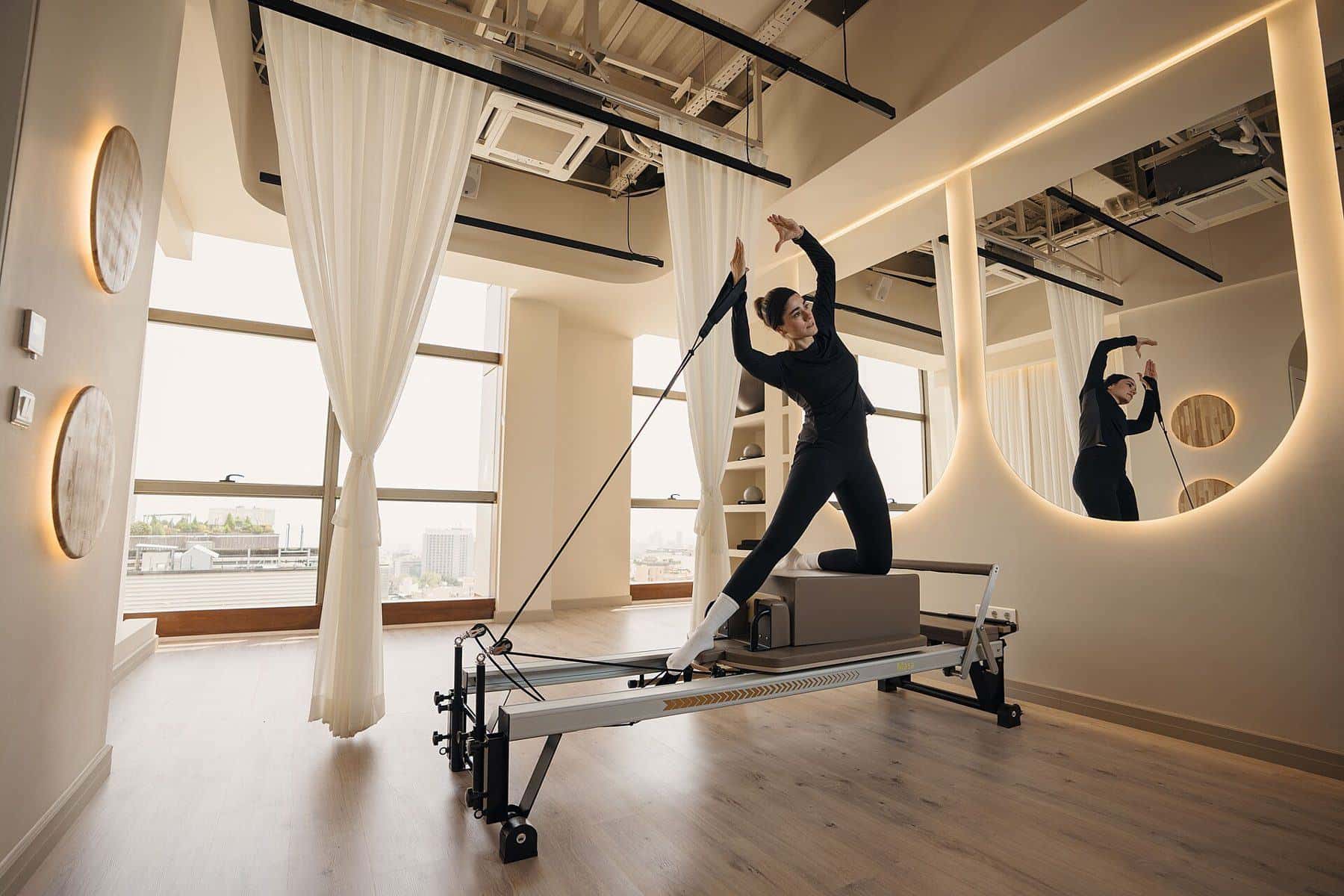
The carriage moves, so getting on and off is the part beginners most often get wrong. The instructor will show you, but the basic rules are:
- Check the springs are hooked on before you step onto the carriage.
- Step on and off from the side or the platform, never with weight on the carriage alone unless instructed.
- Change springs only when the carriage is at rest against the stopper.
- Keep fingers clear of the springs and rails.
- Ask for help whenever you are unsure.
Benefits and limits
Reformer Pilates builds muscular strength and endurance, especially in the trunk, hips and legs, and trains flexibility and control. The adjustable resistance suits a wide range of people. Many find the classes enjoyable and social, which helps them keep coming back.
It is worth being realistic, though. Most reformer classes are moderate intensity. They count towards the muscle-strengthening part of Australia's activity guidelines but are not a full replacement for aerobic exercise. Research on Pilates for specific conditions is mixed; for chronic low back pain it appears better than no exercise but similar to other exercise. If you have an injury or condition, speak to a health professional before starting.
Reformer versus mat
| Reformer | Mat | |
|---|---|---|
| Equipment | Spring-loaded machine | Mat, small props |
| Support | Springs can assist | Body weight only |
| Where | Studio | Studio, gym, home |
| Typical cost | Higher | Lower |
| Learning curve | Machine set-up | Fewer moving parts |
Many people do both: reformer classes in the studio and mat work at home. See our mat Pilates guide.
Beginner tips
- Book a foundations class or intro course. Learning the machine first makes every later class safer and more effective.
- Arrive early. Tell the instructor it is your first time and about any injuries.
- Go slowly. Control the carriage both ways.
- Use your breath. Breathe out on the effort if you can, but never hold your breath.
- Expect some muscle soreness. It is common after your first few classes. Sharp pain is not normal: stop and tell the instructor.
First reformer class checklist
0 of 6 done
Ticks are saved in this browser only.
Choosing a reformer studio
Look for small class sizes, qualified instructors with a recognised reformer or comprehensive certification, clean and well-maintained machines, and clear pricing. Our guide to choosing a studio has a full checklist.
Home reformers
Home reformers range from compact folding models to full studio-grade machines. They take up a lot of space and vary widely in quality. We recommend learning in a studio first, then deciding whether a home machine is worth it. Consider ceiling height, floor space, storage, weight limits and whether replacement springs are available.
Frequently asked questions
Is reformer Pilates good for beginners?
Yes, with a beginner class. The springs can support you through movements, and instructors can adjust the resistance. Learn how to use the machine safely before joining faster classes.
How many reformer classes a week should I do?
Two or three a week is common, but even one regular class helps. Leave time for recovery, especially in your first few weeks, and include aerobic activity elsewhere in your week.
Does a heavier spring make an exercise harder?
Not always. Heavier springs add resistance in some exercises, but in others a lighter spring makes the carriage less stable and the exercise harder to control. Follow your instructor's settings.
Can I do reformer Pilates with a bad back?
Talk to your doctor or physiotherapist first. Many people with back pain do Pilates, but some exercises may need to be modified or avoided. Clinical Pilates may be a better starting point.
Should I buy a reformer for home?
Learn in a studio first. Home reformers vary a lot in quality and size, and it helps to know which features you need before spending money.
What are grip socks for?
Grip socks have rubber patterns on the soles that stop you slipping on the footbar and platform. Many studios require them for hygiene and safety.
Sources and further reading
Facts on this page were checked against these primary and official sources. Conditions change — confirm before you travel or buy.
- Pilates — Wikipedia
- Back pain — healthdirect Australia
- Physical activity and exercise guidelines for all Australians — Australian Government Department of Health