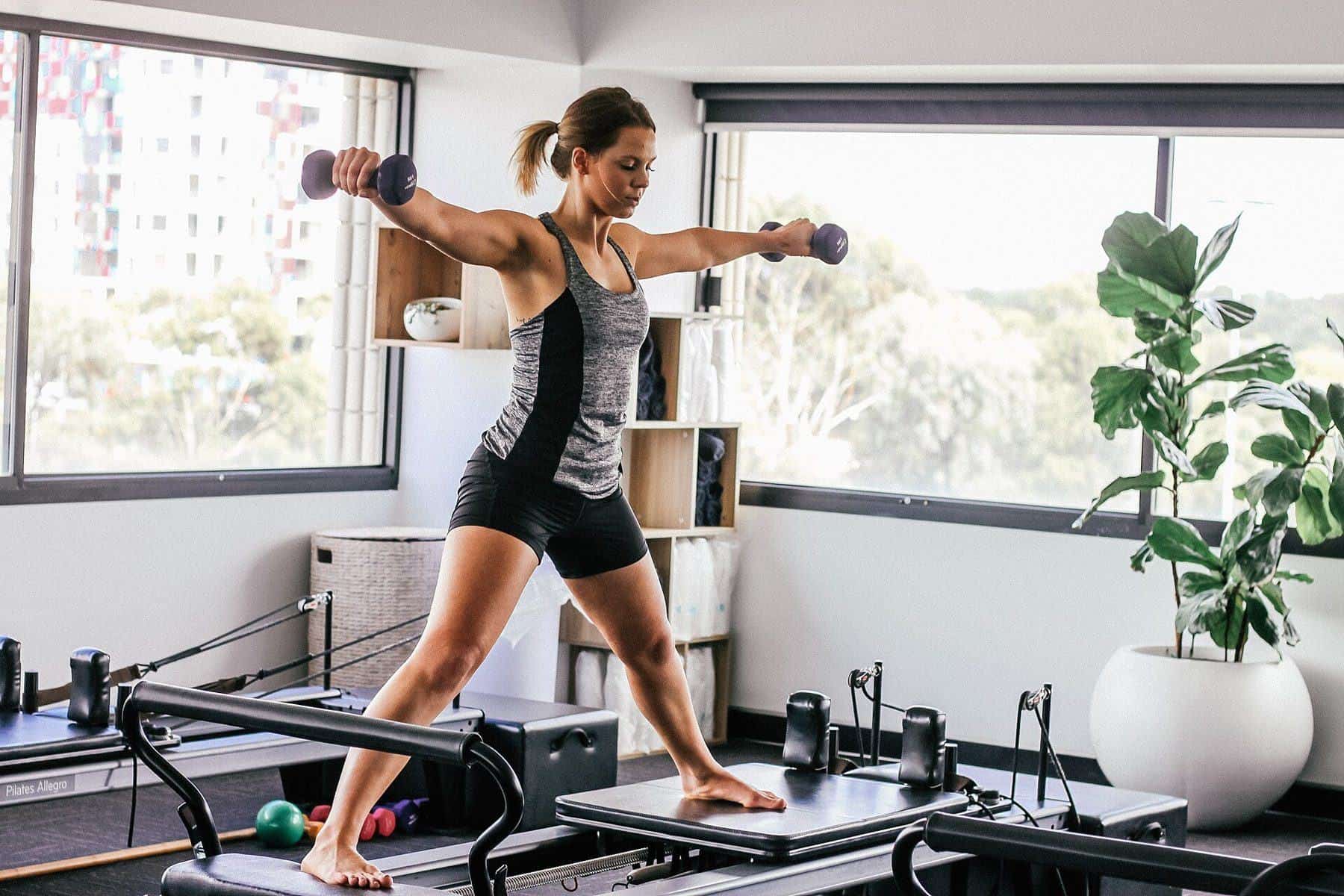
Joseph Pilates was a prolific inventor, credited with 26 patents. He called his machines "apparatus", and he designed each one to support, challenge or extend the work done on the mat. Several of his designs are used, in updated forms, in studios today. Knowing what they are will help you understand studio timetables, private session plans and instructor qualifications.
The reformer
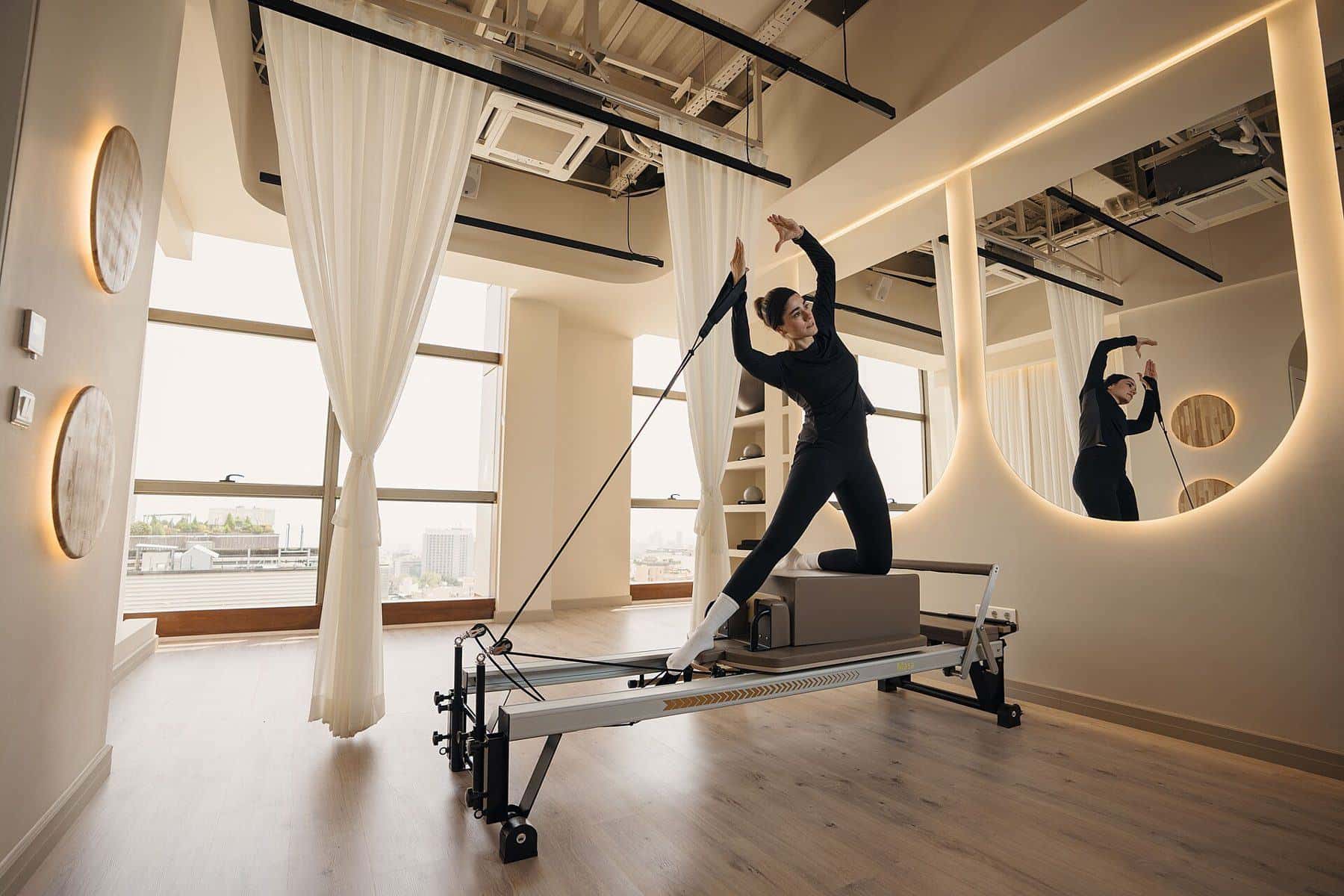
The best-known apparatus, originally called the Universal Reformer. A padded carriage slides along a frame, pulled back by springs. You push against a footbar or pull on straps from lying, sitting, kneeling and standing positions. The reformer is used for group classes, private sessions and clinical work. See our full reformer guide.
The Cadillac or trapeze table
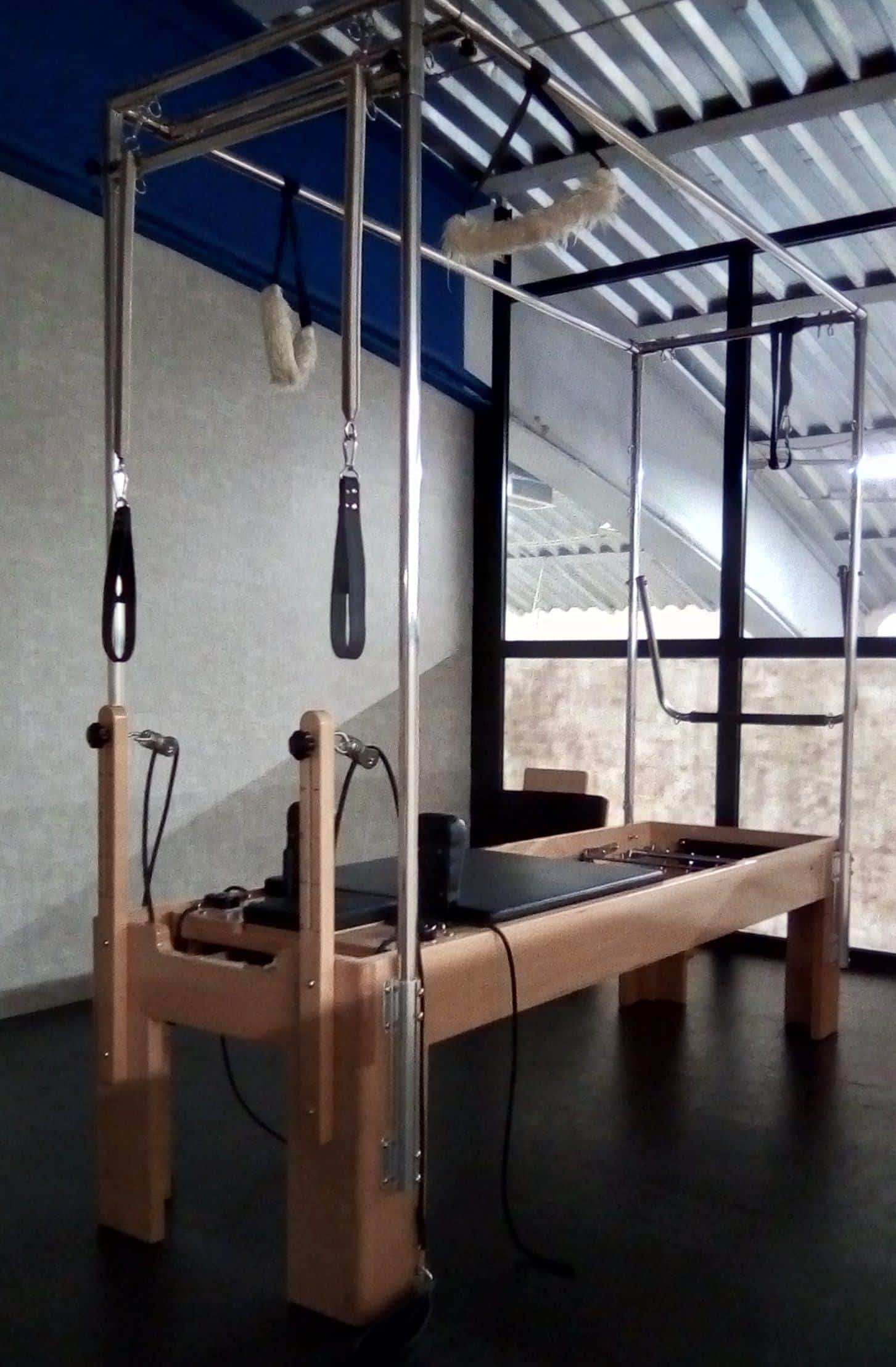
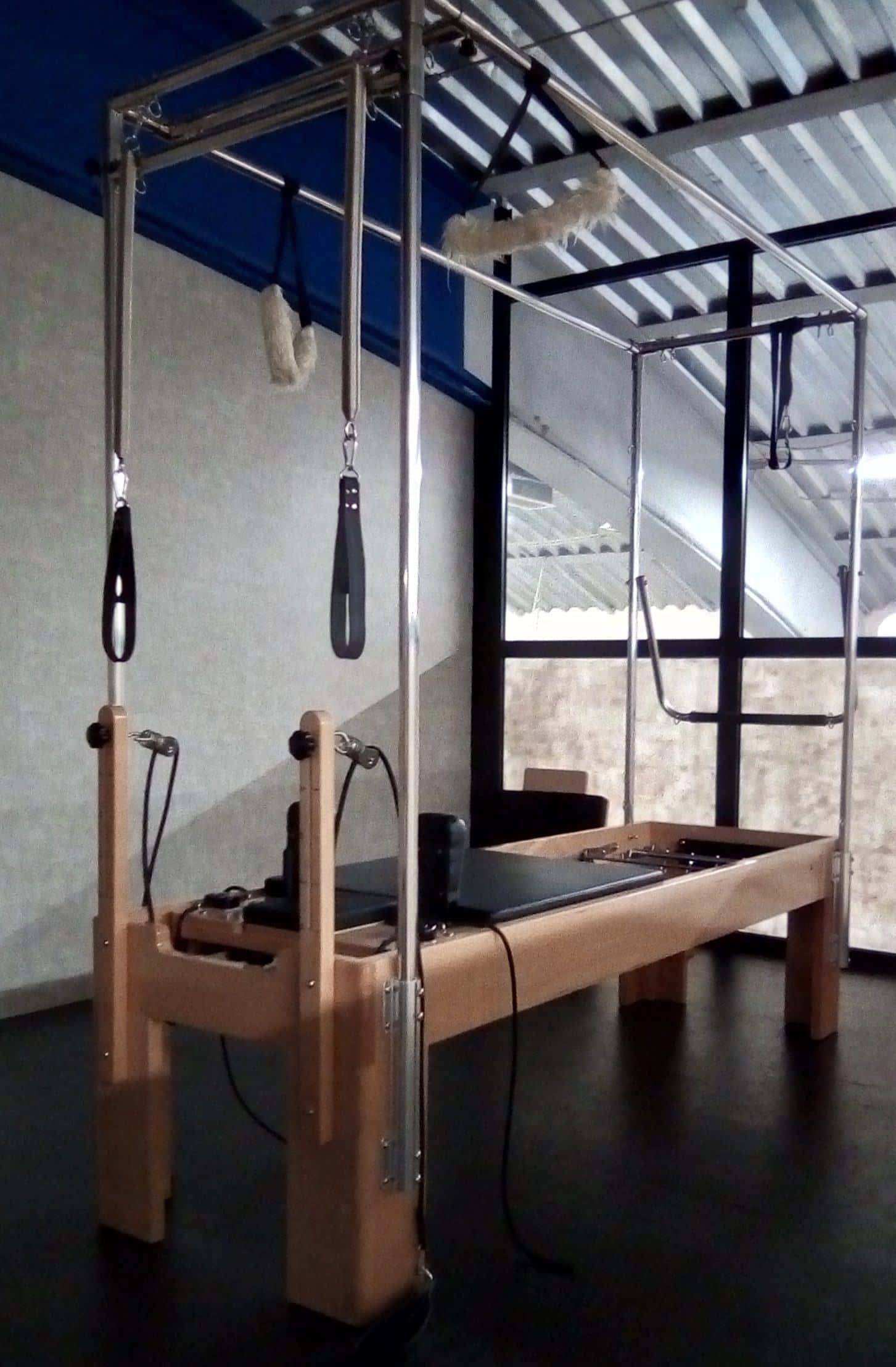
The Cadillac is a raised padded table with a tall frame above it. Springs, a push-through bar, a roll-down bar, leg springs, arm springs and a trapeze can all be attached. Because you can lie on a stable surface while working against springs, the Cadillac is very versatile: it can support people with limited mobility, and it can host acrobatic advanced exercises.
Studios mostly use the Cadillac in private and small-group sessions, and it is common in clinical settings. Some reformers come with a half-height "tower" that offers a few Cadillac-style exercises.
The Wunda Chair
The Wunda Chair, sometimes called the combo chair or split-pedal chair, is a small padded box with a spring-loaded pedal on one side. You press the pedal with your hands or feet while sitting, standing, kneeling or lying on top. It looks simple but is demanding: with a small base of support, it challenges balance, leg strength and shoulder stability. Studios use it in private sessions and in some small-group "chair" classes.
There are also higher chairs, such as the High or "Electric" Chair, with a taller back and handles.
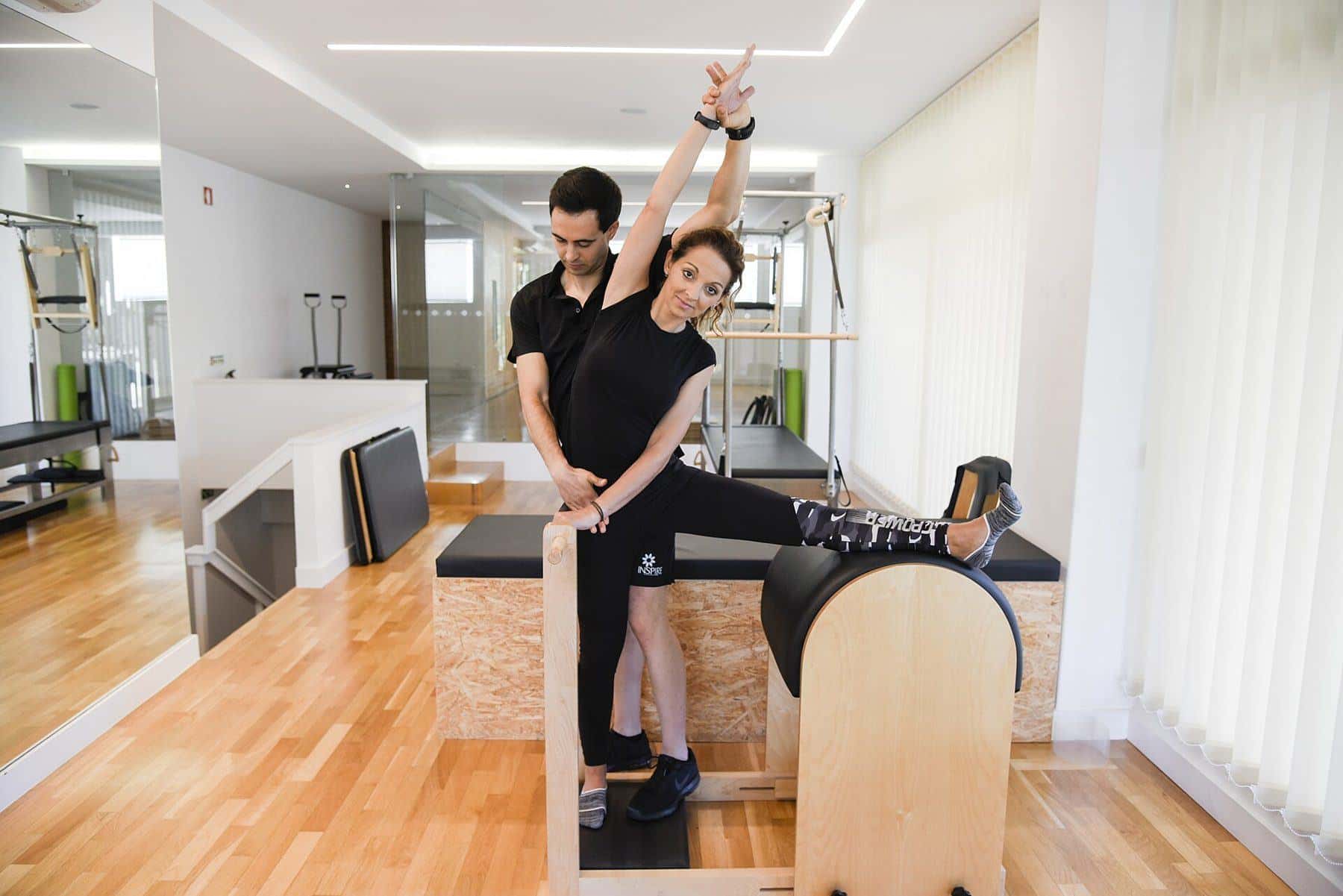
The Ladder Barrel
The Ladder Barrel combines a curved, padded barrel with a wooden ladder, joined by a sliding base so the distance can be adjusted. Exercises include stretches over the barrel, side bends, back extensions and hip work. It is often used to improve spinal mobility and is a popular tool for stretching.
The Spine Corrector and small barrels
The Spine Corrector, or step barrel, is a smaller curved barrel with a step. You lie over it on your back or side for stretches and abdominal work. Smaller arc barrels are used on the mat or reformer to support the spine.
Small props
Many mat and reformer classes use small props:
| Prop | Used for |
|---|---|
| Pilates ring (magic circle) | Squeezing between hands, knees or ankles for resistance |
| Small soft ball | Support under the pelvis or between the knees |
| Resistance band | Adding resistance to arm and leg work |
| Foam roller | Balance challenges and mobility |
| Light hand weights | Arm and shoulder work |
| Stability ball | Balance and support |
Comparing the apparatus
| Apparatus | Main features | Common use |
|---|---|---|
| Reformer | Sliding carriage, springs, straps, footbar | Group, private, clinical |
| Cadillac | Raised table, overhead frame, springs, bars | Private, clinical |
| Wunda Chair | Box with spring-loaded pedal | Private, small group |
| Ladder Barrel | Barrel and ladder | Stretching, spinal mobility |
| Spine Corrector | Small step barrel | Mat-based stretches and core work |
What this means for choosing a studio
Some studios focus on group reformer classes. Others are "fully equipped", with Cadillacs, chairs and barrels, and offer private and small-group sessions across all apparatus. Neither is better; it depends on what you want. If you would like to experience the full method, look for a fully equipped studio and instructors with a comprehensive certification covering mat and all major apparatus.
Safety on the apparatus
Springs store energy. Always follow your instructor's directions for attaching and releasing springs, and never change springs under load. Check that equipment is well maintained: worn straps, frayed springs or wobbly frames are warning signs. Good studios inspect and replace parts regularly.
Apparatus safety basics
0 of 5 done
Ticks are saved in this browser only.
Buying equipment for home
For most people, a good mat and a few small props are all they need at home. Home reformers, chairs and barrels are available, but larger pieces are expensive and need space. Learn on the equipment in a studio first so you know which features matter.
Classical and contemporary designs
You may notice that equipment looks different from one studio to the next. Classical studios often use apparatus built to dimensions close to Joseph Pilates' original specifications, while contemporary studios may use machines with extra adjustments, different spring set-ups or aluminium frames. Exercises are adapted to suit the equipment, so if you change studios, ask the instructor to show you the differences before class.
Frequently asked questions
What is the Cadillac in Pilates?
The Cadillac, also called the trapeze table, is a raised padded table with a frame overhead and sides, fitted with springs, bars and straps. It allows a huge variety of exercises and is often used in private and clinical sessions.
What is a Wunda Chair?
The Wunda Chair is a small box with a spring-loaded pedal. Exercises are done sitting, standing or lying, pressing the pedal with the hands or feet. It is demanding for balance and strength.
What is a Ladder Barrel used for?
The Ladder Barrel combines a curved barrel with a ladder. It is used for stretching and strengthening, particularly spinal extension, side bending and hip mobility.
Who invented Pilates equipment?
Joseph Pilates designed the original apparatus, including the reformer, Cadillac, Wunda Chair and Ladder Barrel. He is credited with 26 patents.
Do I need equipment to do Pilates?
No. Mat Pilates needs only a mat. Apparatus adds variety, support and resistance.
What does "comprehensive" Pilates training mean?
A comprehensive certification trains instructors on the mat and all the major apparatus, not just one piece of equipment.
Sources and further reading
Facts on this page were checked against these primary and official sources. Conditions change — confirm before you travel or buy.
- Pilates — Wikipedia
- Joseph Pilates — Wikipedia