"Clinical Pilates" is a term widely used in Australia for Pilates-based exercise delivered within health care. It is not a separate exercise system. Rather, it applies the principles and equipment of Pilates in a clinical setting, guided by a health professional's assessment of your body, your history and your goals.
Who delivers clinical Pilates
Clinical Pilates is most often delivered by physiotherapists who have completed additional Pilates training. Some exercise physiologists and other allied health professionals also offer it. Physiotherapists must be registered with the Physiotherapy Board of Australia, and you can check any registered health practitioner on the public register of the Australian Health Practitioner Regulation Agency (Ahpra).
This is the key difference from a regular studio class. Pilates instruction itself is not a regulated profession in Australia; a registered health professional is accountable to a national board and works within a professional code of conduct.
What happens at the first appointment
Your first session is usually an individual assessment. The clinician will typically:
- Ask about your health history, injuries, symptoms, medications and goals.
- Assess posture, movement, strength, flexibility and how you perform everyday tasks.
- Explain their findings and how Pilates-based exercise might fit into your plan.
- Teach you some starting exercises, often on the mat or reformer.
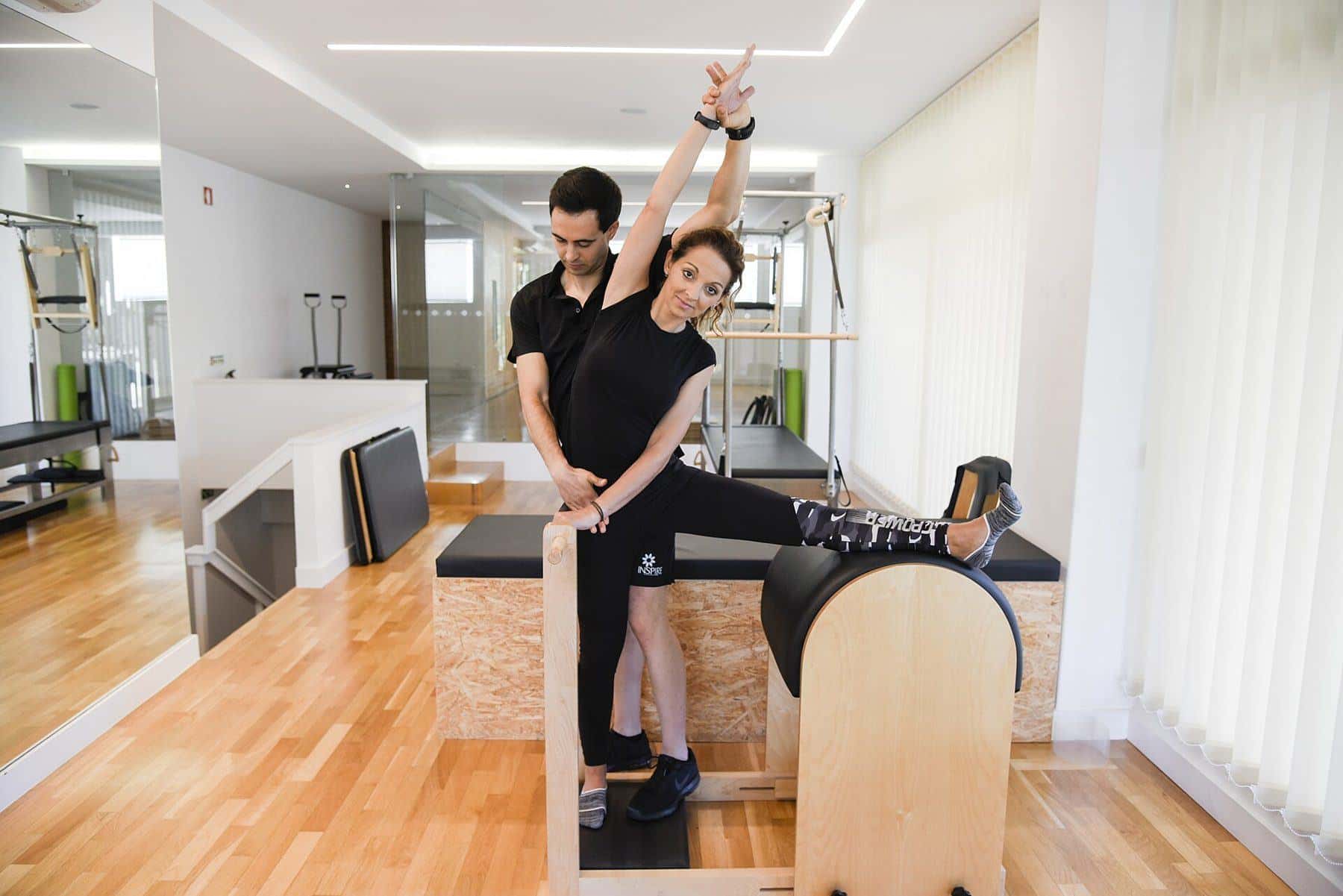
After that, you may continue with individual sessions or join a small supervised class, where each person works on their own tailored program.
Who it may suit
People commonly seek clinical Pilates when they:
- are recovering from an injury or surgery, once cleared by their treating team;
- have ongoing or recurrent pain and want supervised exercise;
- are returning to exercise after a long break or illness;
- are pregnant or postnatal and want closely supervised exercise;
- have a health condition and want an exercise program that takes it into account.
Whether it is right for you is a decision to make with your doctor or physiotherapist.
What the evidence says
It is important to be balanced. Research into Pilates for specific health conditions is still developing, and many studies are small. For chronic low back pain, reviews suggest Pilates is better than doing nothing, but not clearly better than other forms of exercise. There is some evidence of benefits for muscle conditioning in healthy people compared with no exercise.
In 2015, an Australian Government review of natural therapies concluded that the evidence for Pilates was uncertain, and from 2019 Pilates was among the therapies that private insurers could no longer cover as a standalone natural therapy. Physiotherapy, including Pilates-based exercise delivered by a physiotherapist, is treated differently. These rules have been reviewed since, so check the current position with your insurer.
The practical takeaway: exercise of almost any kind helps many musculoskeletal problems, and clinical Pilates is one well-supervised way to do it. It is not a cure, and a good clinician will not promise one.
Clinical versus studio Pilates
| Clinical Pilates | Studio Pilates | |
|---|---|---|
| Delivered by | Registered health professional | Pilates instructor |
| Starts with | Individual assessment | Usually a class booking |
| Program | Tailored to you | Shared class plan |
| Class size | One-on-one or small | Small to large |
| Insurance | May be claimable as physio | Depends on policy |
Questions to ask a clinic
Questions to ask before booking
0 of 7 done
Ticks are saved in this browser only.
Funding and insurance
If you have private extras cover, ask your insurer whether physiotherapy sessions that include Pilates are claimable, how much the rebate is and any annual limits. If you have a chronic condition, ask your GP whether you are eligible for a care plan that provides Medicare rebates for a limited number of allied health visits. Eligibility and rebates change, so confirm details before booking.
Moving on to studio classes
Many people move from clinical Pilates to regular studio classes once their condition is stable. Ask your clinician when that is appropriate and which exercises to avoid or modify. Then use our studio checklist to find a good fit.
Doing your exercises at home
Most clinicians give you a short home program. Doing it regularly between sessions is often what makes the biggest difference. Ask for written instructions or photos, and check your technique at your next appointment. Our home Pilates guide has tips on setting up.
Frequently asked questions
Do I need a referral for clinical Pilates?
You do not usually need a referral to see a physiotherapist privately in Australia. Some funding schemes, such as Medicare chronic disease management plans, require a GP referral. Ask the practice.
Is clinical Pilates covered by private health insurance?
Clinical Pilates delivered by a registered physiotherapist may be claimable as physiotherapy under some extras policies. Cover depends on your policy, so check with your insurer before booking.
How is clinical Pilates different from a normal Pilates class?
It is delivered by a registered health professional after an assessment, and the exercises are chosen for your injury, condition or goals. Classes are usually small and closely supervised.
Can clinical Pilates fix back pain?
Evidence suggests Pilates is better than no exercise for chronic low back pain but not clearly better than other types of exercise. It can be a useful part of a broader treatment plan.
Who can deliver clinical Pilates?
Usually physiotherapists, and sometimes exercise physiologists or other allied health professionals who have completed additional Pilates training.
How can I check a physiotherapist's registration?
Physiotherapists in Australia must be registered with the Physiotherapy Board of Australia. You can check registration on the Ahpra public register.
Sources and further reading
Facts on this page were checked against these primary and official sources. Conditions change — confirm before you travel or buy.
- Register of practitioners — Australian Health Practitioner Regulation Agency
- Pilates — Wikipedia
- Back pain — healthdirect Australia
- Physiotherapy — healthdirect Australia